
New Orleans loves its firsts. First opera in America, first newspaper in Louisiana, the deep well of jazz.
But ask most visitors, or most locals, where the first permanent Asian settlement in the United States was founded, and they probably wouldn't know.
It wasn't on the West Coast. It was thirty miles from where you're probably standing right now, in a marsh that doesn't even show up on most maps anymore.
That place was St. Malo, and its story starts not with a plan, but with an escape.
A tour we think you'll love

Mysteries of Voodoo Tour
Sailors Who Jumped Ship
For over two centuries, Spain ran a trade route between Manila and Acapulco, hauling silk and spices across the Pacific on massive galleons crewed largely by Filipino sailors. Life aboard those ships was far from easy.
When some of the ships stopped along the Gulf Coast, a few sailors simply didn't get back on board.
According to 64 Parishes, the settlement likely took shape sometime in the 1830s, though oral tradition in the Filipino American community places Filipino presence along the Gulf Coast even earlier. They called themselves, and were called by others, Manilamen.
A Village on Stilts
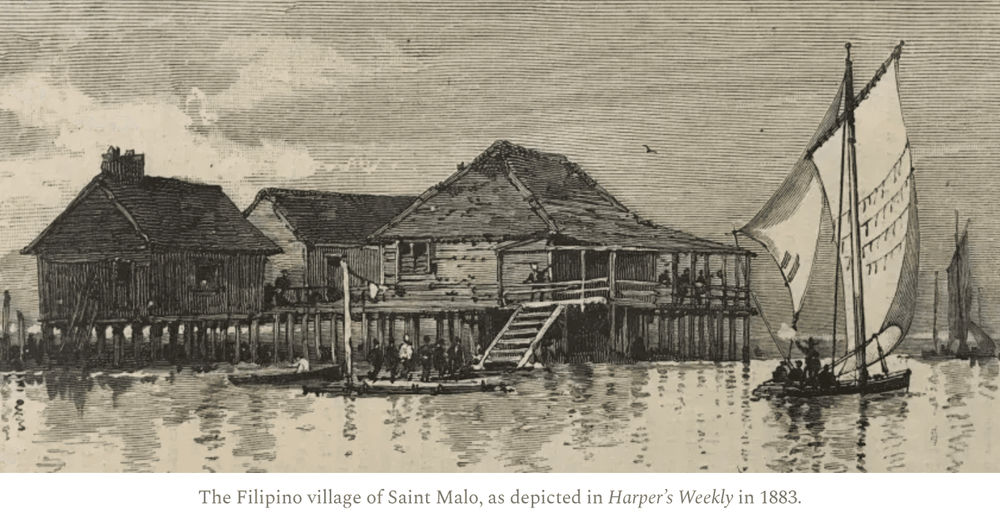
Imagine building a home in the middle of a Louisiana swamp.
The people of St. Malo did exactly that.
The best-known description of the village comes from an 1883 Harper's Weekly article by writer Lafcadio Hearn, who traveled out to the settlement and described more than 150 fishermen living in houses built on stilts over the water.
The houses were made from wood and palmetto fronds, using a style similar to the bahay kubo homes back in the Philippines.
I think that's one of the details that makes this story feel so real. These men had crossed an ocean and ended up in a completely different environment, but they still built homes that reminded them of where they came from.
There was no post office, no church, and no real government presence. Just families, boats, and fishermen making a living from the surrounding waters.
And that little settlement would eventually become connected to a much bigger part of Louisiana's food history.
Did You Know?
St. Malo wasn't actually named after the Filipino settlers.
The name came from Juan San Maló, a leader of a maroon community of formerly enslaved people who lived in the same area decades earlier.
It's interesting that two very different communities ended up choosing the same difficult-to-reach part of the marsh for the same reason: nobody could follow them there.
The Part of the Story Most People Skip
Here's where the story gets even more interesting. The Manilamen weren't just fishermen living quietly in the marshes. Some Filipino sailors also played a role in the Battle of New Orleans in 1815, joining the forces that helped Andrew Jackson defend the city against the British.
That's one thing we love about digging into New Orleans history. You think you're learning one story, then you find another connection hiding underneath it.
And somehow, Filipino history keeps showing up in places you might not expect.
What Happened to St. Malo
St. Malo lasted for decades, but being isolated had its downside too.
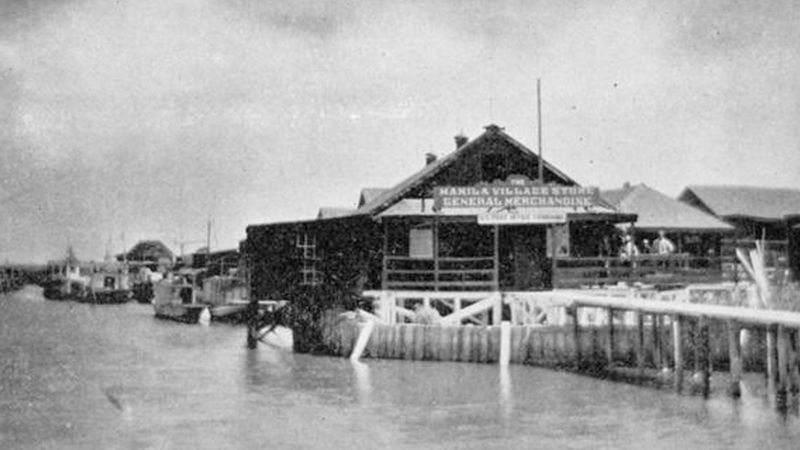
In 1915, a powerful hurricane destroyed the village. Many of the survivors moved a few miles away and rebuilt another Filipino settlement called Manila Village in Barataria Bay.
The shrimping tradition continued there for years until Hurricane Betsy destroyed much of the settlement in 1965.
Then came Hurricane Katrina in 2005, which destroyed much of what was left of the area's physical history, including photographs and other records.
For a community that had already been slowly disappearing from the public memory, losing those records made it even harder to piece the story together.
But the story didn't disappear completely.
Bringing the Story Back
In 2012, the Philippine-Louisiana Historical Society placed a historical marker for Manila Village.
Then in 2019, they did the same for St. Malo, unveiling the marker at the Los Isleños Museum Complex in St. Bernard Parish. The event included Filipino food, folk dancing, and officials from Louisiana and the Philippines.
Descendants of the original settlers, including families with names like Madriaga and Burtanog, still gather to keep that history alive.
Today, thousands of Filipino Americans live in Louisiana, continuing a Filipino presence that goes back generations.
You can't really visit St. Malo anymore. The village is gone, and the marsh has taken most of it back.
But pieces of the story are still here. In family names. In food. In shrimping traditions. And in the Filipino community that continues to call Louisiana home.
Why This Matters When You're Here
We tell ghost stories on our History & Haunted Tours because New Orleans has centuries of layered history, and some of the most important layers are the quietest ones. St. Malo isn't a haunted house story. It's a story about who actually built this region, and it deserves a place in how visitors understand New Orleans, right alongside Creole cottages and Mardi Gras Indians and the French Market.
If this kind of history is what pulls you in, our guides love talking about it. Book a walking tour with New Orleans Secrets and ask your guide about the Manilamen.
You'll probably learn something that never made it into a single guidebook.